


- Commercial virtual reality arcade machines are designed for continuous public operation, with stronger hardware, commercial content, and easier management compared with consumer VR devices.
- The best VR arcade machine depends on venue size, customer flow, target audience, and expected revenue per square meter.
- Different VR game machine categories, including racing simulators, VR motion chairs, shooting systems, and multiplayer platforms, serve different business purposes.
- Successful arcade operators focus on throughput, reliability, content updates, and after-sales support instead of only comparing purchase prices.
- Working with an experienced factory manufacturer helps simplify customization, installation, maintenance, and long-term operation.
The commercial VR industry has moved far beyond simple headset experiences.
Today, successful entertainment venues use virtual reality arcade machines to create immersive attractions that combine advanced hardware, interactive gameplay, and reliable business operation.
The biggest difference between a consumer VR headset and a commercial VR arcade machine is not only the technology — it is the ability to operate thousands of hours in public environments.
For arcade owners, family entertainment centers, shopping malls, and entertainment investors, choosing the right VR equipment can directly influence customer satisfaction, operating efficiency, and long-term profitability.
What is a Commercial Virtual Reality Arcade Machine?
A commercial virtual reality arcade machine is a professional VR entertainment system designed specifically for public venues.
Unlike home VR products such as consumer headsets, commercial VR machines are built for:
- Continuous daily operation
- Multiple users
- Easy staff management
- High durability
- Commercial content licensing
- Revenue-based operation models
A home VR headset may be designed for occasional personal entertainment.
A commercial virtual reality arcade machine is designed to handle:
- Weekend crowds
- Different player experience levels
- Frequent cleaning
- Repeated loading and unloading
- Long operating schedules
This makes commercial VR equipment a completely different category.
Commercial VR Arcade Machines vs Consumer VR Headsets
Many new investors compare arcade equipment with consumer VR products.
However, the two systems are created for different purposes.
| Feature | Consumer VR Headset | Commercial VR Arcade Machine |
|---|---|---|
| Main Purpose | Home entertainment | Public entertainment business |
| Operating Time | Occasional use | Long daily operation |
| User Management | Individual user | Staff-controlled operation |
| Hardware Structure | Lightweight | Industrial-grade design |
| Content | Personal applications | Commercial entertainment content |
| Payment System | Usually unavailable | Coin, card, QR, or POS integration |
| Customer Experience | Individual | Designed for groups and venues |
A commercial VR system must consider not only immersion but also business operation.
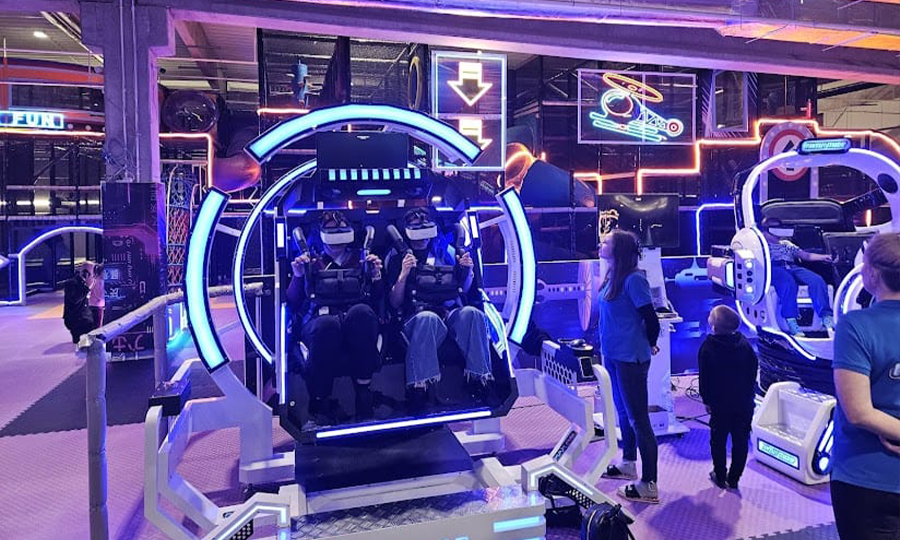
Key Components of a Professional VR Arcade Machine
A complete commercial VR solution usually includes several integrated parts.
VR Hardware System
The headset is only one part of the attraction.
A professional VR arcade setup may include:
- VR headset
- High-performance computer system
- Motion platform
- Mechanical structure
- Control system
- Safety features
The hardware combination determines:
- Visual quality
- Motion accuracy
- Customer comfort
- Equipment lifespan
Motion Simulation System
Many commercial VR machines add physical movement.
Examples include:
- 360-degree rotation chairs
- Flying simulators
- Racing motion platforms
- VR shooting platforms
Physical movement strengthens immersion because customers can feel acceleration, turning, vibration, and environmental changes.
Commercial Payment and Management System
Unlike home devices, arcade equipment needs simple operation.
Common business functions include:
- Coin operation
- Card payment
- QR payment
- Session timing
- Automatic reset
- Operator control panel
These features allow venues to manage customers efficiently.
Top Types of VR Game Machines for Arcades and FECs
Different venues require different VR solutions.
There is no single machine that fits every business model.
The best choice depends on:
- Available space
- Customer demographics
- Ticket pricing
- Expected traffic
- Operation style
1. VR Racing and Flight Simulator Machines
VR racing and flight simulators are among the most visually attractive arcade attractions.
They combine:
- Realistic cockpit design
- Steering or flight controls
- Motion feedback
- Immersive environments
These machines are popular because customers immediately understand the experience.
They are suitable for:
- Shopping malls
- Racing centers
- Family entertainment centers
- Theme parks
Main Advantages
- Strong visual attraction
- Easy customer conversion
- Suitable for beginners
- High replay potential
Players often return to:
- Improve scores
- Challenge friends
- Try different tracks
- Experience different scenarios
2. VR 9D Motion Chairs and Egg Chairs
VR motion chairs are compact solutions for venues with limited space.
They combine:
- VR content
- Moving seats
- Special effects
- Immersive storytelling
These machines are commonly used in:
- Small arcade zones
- Tourist attractions
- Cinema areas
- Mall entertainment corners
Main Advantages
- Small footprint
- Simple operation
- Lower staffing requirements
- Family-friendly experience
For locations where every square meter matters, compact VR machines can create strong revenue opportunities.
3. Multiplayer VR Shooting Systems
Multiplayer VR shooting attractions focus on social interaction.
Instead of one player experiencing VR alone, multiple players can participate together.
Typical features include:
- Multiplayer battles
- Team missions
- Competitive gameplay
- Large virtual environments
These systems are especially attractive for:
- Teenagers
- Groups of friends
- Corporate events
- Entertainment centers
Why Multiplayer Works
Social experiences create stronger memories.
Players often share:
- Competition moments
- Team victories
- Funny gameplay experiences
This improves repeat visits.
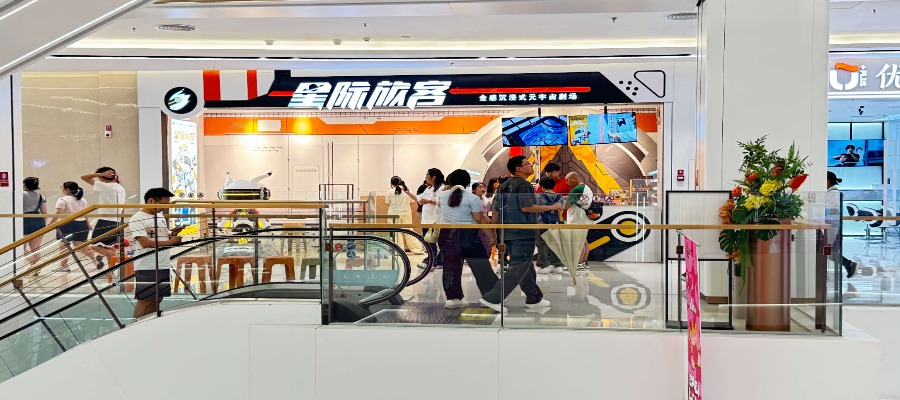
4. Large-Space VR Experience Platforms
Large-space VR systems provide free movement inside a dedicated area.
They can include:
- Multiplayer tracking
- Virtual environments
- Physical space optimization
- Interactive missions
These solutions are often selected by larger venues looking for flagship attractions.
Typical applications include:
- Theme parks
- Large FECs
- Science museums
- Tourism projects
VR Arcade Machine Category Comparison
| VR Machine Type | Space Requirement | Best Location | Main Business Advantage |
|---|---|---|---|
| VR Motion Chair | Small | Mall corners, arcades | Easy operation |
| Racing Simulator | Medium | FECs, entertainment centers | Strong attraction |
| VR Shooting Machine | Medium | Arcades, group venues | High social interaction |
| Large-Space VR Arena | Large | Theme parks, flagship venues | Premium experience |
How to Choose the Best VR Arcade Machine for Maximum Profit
Choosing the right vr arcade machine is not simply about selecting the most advanced technology.
A successful entertainment business needs equipment that matches the venue’s:
- Available floor space
- Customer traffic
- Target audience
- Operating model
- Revenue goals
A machine that performs well in one location may not be the best choice for another.
For example:
A small shopping mall corner may benefit from a compact VR motion chair.
A large family entertainment center may need multiplayer attractions with higher customer capacity.
1. Evaluate Footprint vs Output
In commercial entertainment, space is one of the most valuable resources.
The key question is:
How much revenue potential can one square meter generate?
A good VR machine should balance:
- Equipment size
- Customer capacity
- Session duration
- Daily operating hours
A larger machine is not always better.
The best equipment creates efficient customer flow.
Understanding Throughput
Throughput refers to how many customers an attraction can serve within a specific period.
For commercial venues, important factors include:
| Operational Factor | Why It Matters |
|---|---|
| Experience Duration | Determines how many sessions are possible |
| Loading Time | Affects customer waiting speed |
| Number of Players | Influences hourly capacity |
| Staff Requirements | Impacts operating costs |
| Equipment Reliability | Reduces downtime |
A machine with strong throughput can generate better long-term value even if its initial investment is higher.
2. Consider Customer Experience and Replay Value
The most profitable VR attractions are not always the ones with the most complicated technology.
They are the ones customers want to experience again.
High replay value usually comes from:
- Competitive gameplay
- Multiplayer interaction
- Different game content
- Skill improvement
- Social sharing
For example:
A racing simulator encourages players to beat lap records.
A shooting attraction encourages teams to compete.
A motion simulator allows customers to experience different virtual adventures.
3. Analyze Maintenance and After-Sales Support
A commercial virtual reality game machine operates differently from home entertainment products.
Downtime directly affects business performance.
Before purchasing equipment, operators should evaluate:
- Spare parts availability
- Remote technical support
- Software updates
- Hardware warranty
- Installation assistance
A cheaper machine with frequent failures may create higher operating costs over time.
4. Think About Future Expansion
Successful entertainment venues often grow step by step.
The selected VR equipment should support future development.
Consider:
- Can additional machines be added?
- Can content be upgraded?
- Can the layout be expanded?
- Can the equipment support different customer groups?
A flexible equipment strategy helps businesses adapt as customer preferences change.
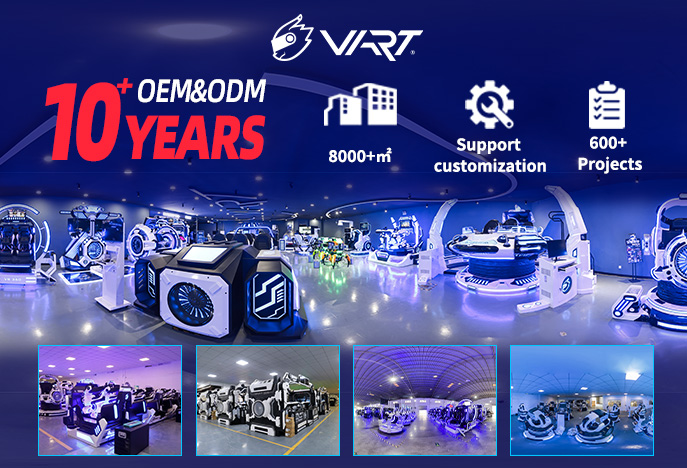
Why Source VR Arcade Machines Directly from Factory Manufacturers?
When purchasing commercial VR equipment, choosing the right supplier is as important as choosing the machine itself.
Many buyers search for a vr arcade machine supplier, but not every company has the ability to design, manufacture, customize, and support equipment long term.
Working directly with an experienced manufacturer provides several advantages.
Supply Chain Advantages
A direct factory partner can provide:
Product Customization
Different venues have different requirements.
Factory manufacturers can often customize:
- Machine appearance
- Logo branding
- Payment systems
- Voltage standards
- Game configurations
- Interior design
This allows equipment to match the venue concept.
Better Technical Communication
Direct communication with engineers helps solve practical questions:
- How much space is required?
- What power supply is needed?
- How should the equipment be installed?
- What maintenance procedures are recommended?
This reduces mistakes before installation.
Long-Term Maintenance Support
A manufacturer understands the internal structure of the equipment.
This makes it easier to provide:
- Replacement parts
- Technical troubleshooting
- Software assistance
- Product upgrades
For commercial operators, long-term support is often more valuable than a lower initial purchase price.
Why Choose VART VR as Your Commercial VR Equipment Partner?
VART VR focuses on developing commercial immersive entertainment equipment for global venues.
The company provides solutions including:
- VR arcade machines
- VR motion simulators
- VR racing systems
- VR shooting attractions
- Large-scale immersive VR experiences
VART VR combines:
- Hardware development
- Product manufacturing
- Content solutions
- Venue planning
- Technical support
This helps customers move from a single equipment purchase toward a complete entertainment solution.
What Makes a Professional VR Equipment Manufacturer Different?
A reliable manufacturer should provide more than a product catalog.
Professional suppliers should understand:
| Capability | Why It Matters |
|---|---|
| Product Engineering | Ensures stable operation |
| Commercial Design | Supports long-term public use |
| Content Support | Improves customer replay |
| Export Experience | Simplifies international delivery |
| Installation Guidance | Reduces setup problems |
| After-Sales Service | Protects business operation |
The goal is not simply buying a machine.
The goal is creating a reliable attraction that continues generating customer value.
Common Mistakes When Buying Commercial VR Machines
Many new operators focus too much on equipment appearance or price.
However, several important factors are often overlooked.
Mistake 1: Choosing Only Based on Price
The cheapest option may not provide:
- Stable performance
- Good customer experience
- Reliable support
- Long equipment lifespan
Commercial equipment should be evaluated as a business asset.
Mistake 2: Ignoring Venue Conditions
Before purchasing, operators should confirm:
- Available floor area
- Ceiling height
- Electrical requirements
- Customer flow
- Safety clearance
Proper planning prevents installation problems.
Mistake 3: Buying Equipment Without Content Planning
Hardware attracts customers.
Content keeps them returning.
A successful VR venue needs:
- Variety of experiences
- Regular content updates
- Different difficulty levels
- Suitable experiences for different age groups
Commercial VR Arcade Machine Buying Checklist
Before making a purchasing decision, consider:
| Question | Why It Matters |
|---|---|
| Is the equipment designed for commercial operation? | Ensures durability |
| How many customers can it serve per hour? | Determines revenue potential |
| What space does it require? | Helps venue planning |
| Is technical support available? | Reduces downtime |
| Can the supplier customize the solution? | Supports different business models |
| Are spare parts available? | Improves long-term operation |
| Does the content support repeat visits? | Increases customer retention |
Frequently Asked Questions About Commercial VR Arcade Machines
What is a commercial virtual reality arcade machine?
A commercial virtual reality arcade machine is a professional VR entertainment system designed for public venues such as arcades, malls, FECs, and theme parks.
Unlike home VR devices, commercial systems are built for repeated operation, customer management, and revenue generation.
What types of VR arcade machines are most popular?
Popular commercial VR equipment includes:
- VR racing simulators
- VR flight simulators
- VR motion chairs
- VR shooting machines
- Multiplayer VR arenas
The best choice depends on venue size and customer expectations.
How much space does a VR arcade machine need?
Space requirements depend on the equipment type.
Compact VR motion chairs may only require a small area.
Large multiplayer VR systems require dedicated spaces for movement, safety clearance, and customer waiting areas.
Are VR arcade machines profitable?
Commercial VR machines can generate strong revenue when selected correctly.
Profitability depends on:
- Location
- Customer traffic
- Ticket pricing
- Equipment utilization
- Operating costs
The equipment itself is only one part of a successful arcade business.
Why buy VR arcade machines directly from a manufacturer?
Buying directly from a factory manufacturer can provide advantages including:
- Better customization
- Faster technical communication
- More flexible configurations
- Easier maintenance support
It also helps operators build long-term relationships with the equipment provider.
What is the difference between a VR game machine and a home VR system?
A VR game machine is designed for commercial entertainment environments.
It usually includes stronger hardware, commercial software, motion systems, payment integration, and easier operation management.
Final Thoughts: Choosing the Right VR Arcade Machine for Your Business
The future of entertainment is moving toward more immersive and interactive experiences.
Commercial virtual reality arcade machines give operators the opportunity to create attractions that combine technology, storytelling, and customer engagement.
However, choosing the right equipment requires more than comparing specifications.
Successful operators evaluate:
- Customer experience
- Space efficiency
- Equipment reliability
- Content quality
- Supplier capability
Whether you are opening a new arcade, expanding an FEC, or adding immersive attractions to an existing venue, selecting the right VR equipment partner is one of the most important decisions.
VART VR continues to develop commercial VR solutions that help entertainment venues create memorable experiences and build sustainable operations.
